
Would you like to learn more about infrastructure, logistics, and digitalization in Carinthia?
Download our whitepaper “Carinthia Connected: Infrastructure, Logistics and Digitalisation as Regional Business Advantages” or contact us!

Michael Stabentheiner
For many companies today, the issue of the right location begins with digital infrastructure. They work with cloud applications, exchange large amounts of data or control production facilities via digital systems.
For this to work, data must be transmitted quickly, reliably and securely.
Carinthia is systematically expanding this infrastructure. Fibre optic networks connect companies, research institutions and regions, while at the same time, new international data connections are being created with the ALPSiX internet exchange point.
Together, this creates the basis for digital business models, innovation and international cooperation.

Tinefoto
High-performance networks do not develop on their own. They are the result of long-term investments and cooperation between the public sector and infrastructure operators. Carinthia is consciously pushing this development:
The expansion of the digital infrastructure in Carinthia is supported by several players. BIK Breitbandinitiative Kärnten GmbH, a wholly owned subsidiary of the Province of Carinthia, works together with private network operators to promote stable, fast and reliable internet connections in both urban and rural areas. This creates high-performance networks that reliably connect companies, research institutions and regions with each other, even outside of greater metropolitan areas.

tinefoto
Faster, more direct and safer: a new internet exchange point is being created with ALPSiX in Carinthia.
Data streams will then no longer have to take a detour via large network nodes in other cities. For companies, this means shorter data paths, lower latency times and more stable connections. At the same time, ALPSiX strengthens the international networking of the economic area in the Alps-Adriatic region and creates new conditions for digital innovation.

@ Amt der Kärntner Landesregierung
How do you establish digital infrastructure in a federal province that boasts many valleys, alpine regions and decentralised locations? What role do cooperations with network operators, municipalities and civil engineering companies play in this? In this interview, Peter Schark from BIK Breitbandinitiative Kärnten GmbH explains how fibre optic expansion is organised in Carinthia, what questions companies and investors are asking and why projects such as ALPSiX open up new prospects for the location.
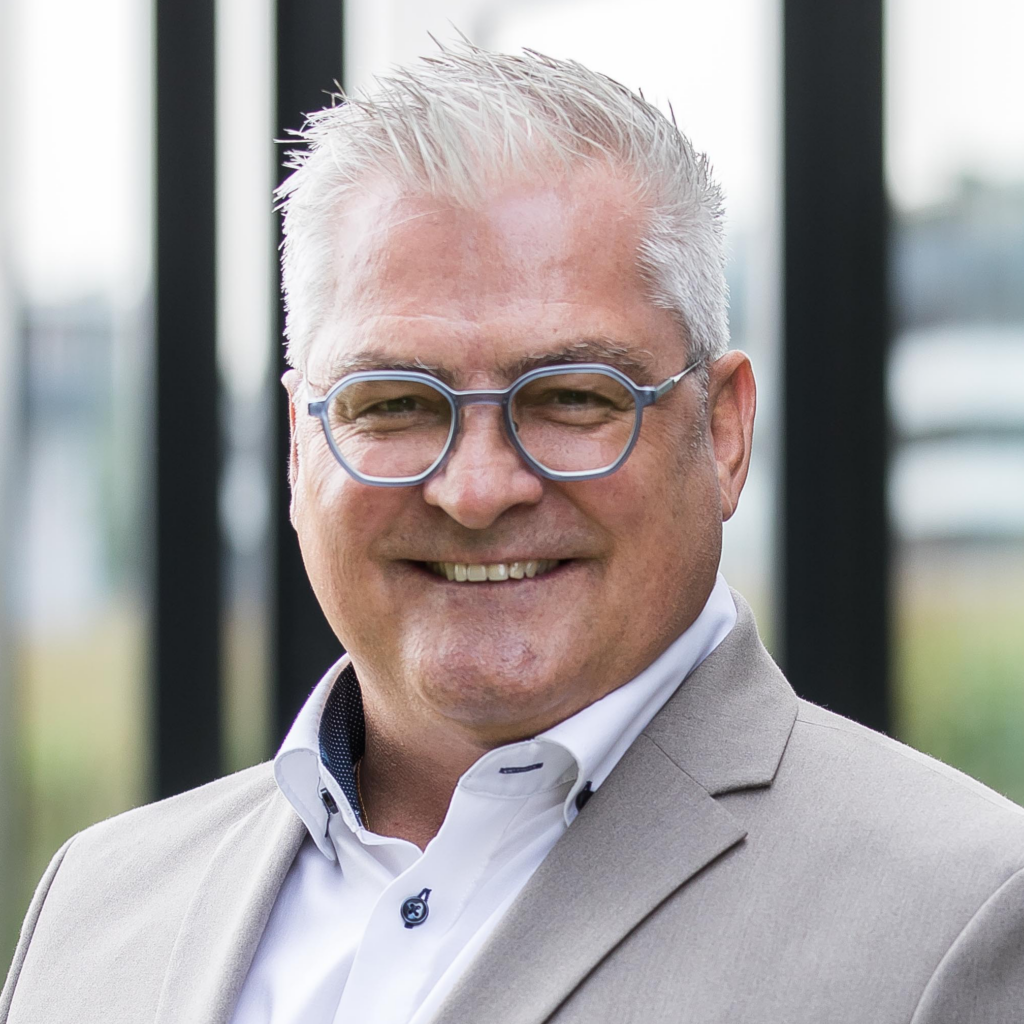
„Today, digital infrastructure is a decisive locational factor – just like transport connections or energy supply.“
Carinthia.com: Mr Schark, what role does the Carinthia Broadband Initiative (BIK) play in the expansion of digital infrastructure?
Peter Schark: BIK is a wholly owned subsidiary of the Province of Carinthia and has a special role: we act as a kind of hub. On the one hand, we coordinate funding programmes and infrastructure projects; on the other, we work closely with private network operators and municipalities.
In doing so, we do not pursue any private commercial interests of our own. Our aim is to establish an infrastructure that works in the long term and can be used by different providers. This neutral role creates trust, both with companies and with infrastructure partners.
Why is digital infrastructure such an important locational factor today?
Peter Schark: Today, digital infrastructure is a fundamental prerequisite for economic development. Companies work with cloud applications, networked production facilities or data-intensive applications. To do this, they need stable and high-performance data connections.
International studies show that land or properties with a fibre optic connection are worth 12 to 15 percent more than comparable properties without fibre optics. In Scandinavian countries, you can see very clearly how strongly infrastructure can influence economic development: many successful companies in the gaming industry are based in Stockholm, for example, because fibre optics was already available there much earlier. This shows that digital infrastructure today is just as much a locational factor as transport connections or energy supply.
What questions are most frequently asked by investors or company management in this context?
Peter Schark: One of the first questions is indeed: What bandwidths are available? Companies want to know whether their applications can run reliably and whether sufficient capacity is available. At the same time, it is also about stability and reliability. Companies want to be sure that data connections work reliably and that their systems are connected in a stable manner.
Our response in Carinthia is clear: we build networks to function in the long term. This includes a high-performance fibre optic infrastructure, but also redundant connections and sufficient reserves in the network to cover future requirements.
How can digital infrastructure also be expanded across the province outside of urban areas?
Peter Schark: Our aim is not just to supply individual locations, but to establish networks that cover as much of the province as possible. In our projects, we generally achieve coverage of over 85%, often even over 90%. This is important because digital infrastructure must not function only in urban areas. Companies in rural areas must have conditions just as good as those in urban areas. Treating urban and rural regions equally is a central point of our model. And I think that’s exactly why it is so well received.
The expansion of such infrastructure rarely works alone. What role do cooperations play?
Peter Schark: The expansion of digital infrastructure is always a joint project. We work closely with private network operators, municipalities and construction companies in Carinthia.
We are particularly proud of our collaboration with the civil engineering sector. When roads are built or pipelines are laid, we try to coordinate these projects with each other. Of course, this is also a challenge because different construction sites and plans have to be brought together. But this is precisely where a paradigm shift is needed: infrastructure projects must be thought through more collectively. We definitely want to continue this cooperation because it is a win-win situation for everyone involved.
In addition to fibre optic networks, a new internet exchange point is being created with ALPSiX. What is the significance of this project?
Peter Schark: Let me try to explain it simply. If you think of the internet a bit like a highway network, then two major international data routes run through Carinthia; one connects North Africa with Scandinavia, another comes from the north over the Tauern mountains and heads east.
So, these data highways are already there, but there was no on-ramp or off-ramp. With ALPSiX, we create precisely this access. Providers can connect directly, data has to take fewer detours and costs are reduced. In the long term, this also opens up new perspectives – and I might be getting carried away here, but I’m thinking of data centres, for example.
Monte Nero
Download our whitepaper “Carinthia Connected: Infrastructure, Logistics and Digitalisation as Regional Business Advantages” or contact us!