Carinthia: A Place Where Stability Makes the Difference
After almost twenty years abroad, Christian Goritschnig returned to Carinthia, a region he values for its safety and social stability. Now working as an energy consultant at the Government of Carinthia, he discusses the region’s infrastructure, services and the advantages of raising a family in such a solid and secure environment.
After living and working abroad for several years, what made you decide to return to Carinthia, and how has this experience shaped your view of stability and security in the region?
Christian: I was away from Austria for almost 20 years. Returning wasn’t something I had planned; it simply happened after my previous work engagement ended. As I still had an apartment and a social network in Austria, I decided with my family to come back and apply for work here. Although the job search was somewhat challenging at first, it ultimately worked out well, and I am now satisfied with my current workplace in Klagenfurt. I honestly never thought much about security before; but yes, having guaranteed social security in the place where you live and work is certainly a major advantage. Especially with a family and young children, it brings real peace of mind to have stable and secure surroundings. It allows you to focus on the important things in life without having to worry about additional concerns on top of your daily chores. And this is exactly what you find in Carinthia — along with great surroundings with plenty of opportunities to enjoy life outside of work.
Which structural elements are key to Carinthia being recognised for its stability and security at the institutional, social and economic levels?
Christian: I believe the region has solid structural conditions — conditions that can certainly still be expanded and improved — including mobility, which is strongly influcenced by the existing road network. Improved public transport services would certainly increase its attractiveness, especially in rural areas. There is a very good supply infrastructure, and digitalisation is heavily focused on expanding the fibre optic network. The education sector is well developed, offering a strong selection of universities, universities of applied sciences, and other educational institutions. The environmental factor is also worth mentioning: nature is still well-preserved, and Carinthia offers excellent recreational opportunities for those who enjoy activities in the “great outdoors”.
How do the strength of the healthcare system and the reliability of public services influence residents’ and newcomers’ sense of trust?
Christian: This is a somewhat more difficult question to answer. Changes in primary healthcare have become noticeable: medical costs and waiting times are a critical factor and have not necessarily changed for the better. However, Carinthia’s is still a very good system compared to many of the countries I have worked in. The quality standard is still very high and and everyone can be assured of treatment in the event of an unforeseen medical need. Overall, the administration is well structured. While it can occasionally seem slow or overly bureaucratic, it is nonetheless committed and adequately effective.
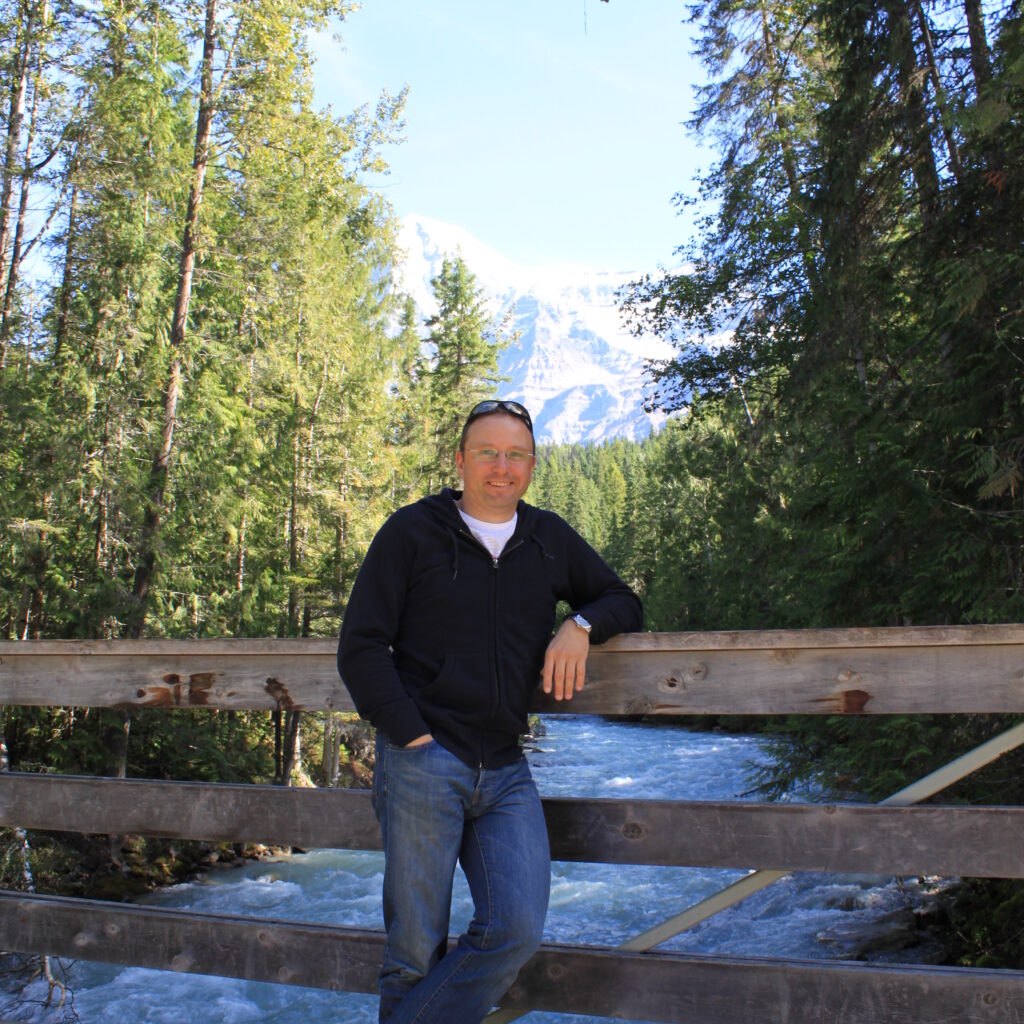
Christian Goritschnig: Energy consultant, Engineering Geologist
Christian Goritschnig brings seven years of public-sector work supporting municipalities on energy, renewables, climate adaptation and EU project coordination, combined with twenty years of worldwide design and construction expertise. His background spans tunnelling with NATM, SEM, SCL and various TBM methods, along with extensive geological and geotechnical mapping, as well as construction of industrial buildings. He has overseen site supervision and quality control on waterproofing, rebar and concrete works, led tender and detailed design for major urban tunnel projects, and gained solid experience in mass-movement assessment, slope stabilisation and erosion control.